
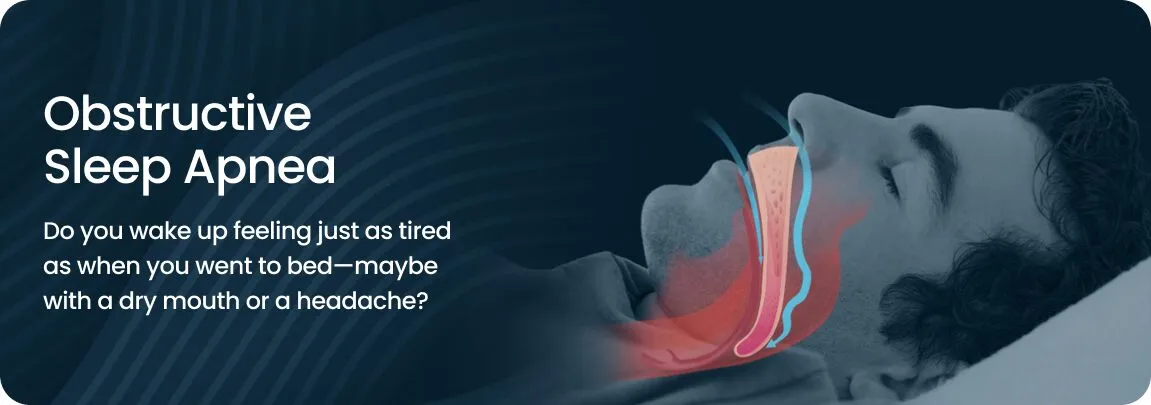
Obstructive sleep apnea (OSA) is exhausting in a way that is hard to explain to someone who has not lived with it. You sleep for eight hours, sometimes more, and wake up feeling as though you barely slept at all. The reason is that your airway repeatedly collapses during the night, your brain briefly rouses you to restore breathing, and this cycle repeats dozens or even hundreds of times. You rarely remember these awakenings, but they fragment sleep so thoroughly that daytime function suffers.
The first-line treatment for OSA is continuous positive airway pressure (CPAP), and it works remarkably well when used consistently. Yet a substantial minority of patients continue to feel sleepy during the day even with good CPAP adherence. This residual sleepiness is where armodafinil enters the picture. Armodafinil is FDA-approved specifically for excessive sleepiness associated with OSA as an adjunct to standard treatment, and it is one of the reasons many patients first look into armodafinil after their sleep specialist mentions it.
A fatigue reducer may support alertness, but it does not replace adequate sleep, recovery, or medical care.
This article explains what armodafinil does and does not do for OSA patients, how it fits alongside CPAP, and what to expect in practice.
Why CPAP Alone Sometimes Isn’t Enough
CPAP treats the mechanical problem: it splints the airway open so breathing does not stop. In most patients, this restores sleep architecture and daytime alertness within weeks. But studies of CPAP-adherent patients have consistently found that somewhere in the range of one in ten to one in five still report significant daytime sleepiness.
Several explanations have been proposed:
- Years of untreated OSA may cause changes in wake-promoting brain regions that do not fully reverse
- Imperfect adherence, where a patient uses CPAP but removes it partway through the night
- Residual events that persist despite therapy, particularly in patients with complex or positional apnea
- Coexisting conditions such as depression, obesity-related fatigue, or insufficient sleep time
- Individual variation in how much sleep fragmentation a person can tolerate
Armodafinil does not address any of these root causes. What it does is directly counteract the symptom, daytime sleepiness, so that patients can function while the underlying issues are managed.
How Armodafinil Works in the OSA Context
Armodafinil is the R-enantiomer of modafinil and belongs to a class of medications called eugeroics, or wakefulness-promoting agents. Its primary mechanism is inhibition of the dopamine transporter, which raises extracellular dopamine in brain regions involved in arousal. Downstream, it increases activity in orexin (hypocretin) and histamine pathways that maintain wakefulness. Unlike amphetamines, it does not cause a surge of dopamine release, which is why its stimulant feel is mild and its abuse potential is low.
For an OSA patient, the practical result is that the drowsiness, brain fog, and tendency to doze during quiet moments recede. What it does not do is improve sleep quality, reduce apneic events, or lower blood pressure. It is a daytime symptom treatment layered on top of nighttime airway treatment.
Why it is called an adjunct, not a replacement
The prescribing information is explicit that armodafinil should be used alongside, not instead of, CPAP or another primary OSA therapy. This is not a formality. Untreated OSA carries real cardiovascular risk, including hypertension, arrhythmia, and stroke, and masking the sleepiness without treating the airway removes the most noticeable warning sign while leaving the danger intact. A patient who feels fine on armodafinil but skips CPAP is in a worse position than one who feels sleepy and uses CPAP nightly.
What the Evidence Shows
Clinical trials of armodafinil in CPAP-treated OSA patients with residual sleepiness have generally found meaningful improvements on objective wakefulness testing (the Maintenance of Wakefulness Test) and on subjective sleepiness scales, along with improvements in patient-reported overall function. Research also suggests that measures of attention, memory, and fatigue improve alongside sleepiness. The effect is not dramatic in every patient, but the average benefit is consistent across studies, and importantly, armodafinil did not reduce CPAP use in trial participants, addressing the concern that patients would abandon their machines once they felt better.
Doses studied were 150 mg and 250 mg taken once in the morning. The 250 mg dose produced somewhat larger effects on objective measures but with more side effects, and most clinicians start at 150 mg.
Practical Dosing for OSA Patients
The standard approach is straightforward:
- Start at 150 mg taken once in the morning, ideally within an hour of waking.
- Continue CPAP every night, aiming for at least four hours per night and preferably the full sleep period.
- Reassess after two to four weeks. If sleepiness is adequately controlled, stay at 150 mg. If not, a physician may increase to 250 mg.
- Take it every day, not just on days that feel bad. Consistent use produces a stable plasma level and a more predictable effect.
Because armodafinil’s half-life is around 15 hours, taking it after mid-morning can delay sleep onset that night, and poor sleep is exactly what an OSA patient cannot afford. Morning dosing is not a suggestion; it is the rule.
Side Effects Most Relevant to OSA Patients
OSA patients tend to have a specific profile of coexisting conditions, and a few side effects deserve extra attention in this population.
Blood pressure. Armodafinil can cause small increases in heart rate and blood pressure. Many OSA patients already have hypertension, so monitoring is sensible, particularly in the first month.
Headache. The most common side effect overall. It is often related to dehydration and tends to fade after the first week or two.
Insomnia. Usually a sign of late dosing. If sleep is disrupted, move the dose earlier before considering a lower dose.
Anxiety and irritability. Less common but more likely in patients with an existing anxiety disorder or heavy caffeine use.
Reduced appetite. Generally mild, but worth noting in patients using weight management as part of their OSA plan; unintended appetite suppression is not a substitute for a structured approach.
Rare but serious reactions include severe skin rashes and hypersensitivity syndromes, which typically appear in the first weeks. Any rash, especially with fever or mouth sores, warrants immediate medical attention and stopping the drug.
Interactions to Discuss With Your Doctor
OSA patients often take several medications, and armodafinil interacts with a few common ones.
- Hormonal contraceptives: armodafinil reduces their effectiveness through liver enzyme induction. A backup method is recommended during use and for a month after.
- Warfarin: levels may shift, so more frequent INR monitoring is advised when starting or stopping.
- Certain antidepressants and antipsychotics: metabolism may be affected. This is usually manageable but should be reviewed.
- Cyclosporine and some cardiac medications: armodafinil can lower their blood levels.
None of these are absolute contraindications, but all of them are reasons to have a pharmacist review your full medication list.
Setting Realistic Expectations
Patients often hope that armodafinil will make them feel the way they did before OSA developed. That is not usually what happens. A more accurate expectation is that the worst of the sleepiness is removed, the tendency to nod off in meetings or while driving disappears, and mental clarity improves enough that work and daily life feel manageable again. Underlying fatigue, the heavy-limbed tiredness that comes from years of fragmented sleep, may improve less than the sleepiness does.
A few markers of success worth tracking:
- Fewer unintended naps or near-misses while driving
- Ability to sit through quiet activities (reading, films, lectures) without dozing
- Improved concentration on detailed work in the afternoon
- Stable or improved mood
If none of these change after a month at 150 mg, that is a signal to revisit the diagnosis, check CPAP adherence data, and consider whether something other than OSA is driving the sleepiness.
Driving and Safety
Excessive sleepiness is a leading cause of motor vehicle accidents, and OSA patients are overrepresented in crash statistics. Armodafinil meaningfully reduces this risk when it is working well. However, feeling alert is not the same as being fully safe, and patients should not use armodafinil as license to drive after inadequate sleep. If you have been told by a physician or licensing authority that your OSA makes driving unsafe, armodafinil does not automatically reverse that judgment; it is a conversation to have with your specialist. Any wakefulness-promoting agent supports safe function; it does not replace the need for treated sleep.
A brief note on responsible use: armodafinil is a prescription medication and a Schedule IV controlled substance in the United States, with rules that vary by country. It is not a replacement for CPAP or for adequate sleep. Discuss it with your doctor, particularly if you have cardiovascular disease.
FAQ
Can I take armodafinil on days I skip CPAP? You can, but you should not be skipping CPAP. Armodafinil will make you feel more alert on those days, but the cardiovascular risk of untreated apnea remains. Treat missed CPAP nights as a problem to solve, not something to paper over.
Will armodafinil help me lose weight and reduce my OSA? Its appetite suppression is mild and not a reliable weight-loss tool. Weight loss is genuinely helpful for many OSA patients, but it should come from diet, activity, and where appropriate medical support, not from a side effect.
How is armodafinil different from modafinil for OSA? Both are approved for OSA-related sleepiness and both work similarly. Armodafinil lasts somewhat longer from a single dose and tends to feel steadier through the afternoon. Some patients respond better to one than the other, and switching is reasonable if the first choice is disappointing.
Do I need to take it forever? Not necessarily. Some patients find that after months of consistent CPAP, their residual sleepiness resolves and they can stop. Others need it long term. Periodic trials off the medication, agreed with your doctor, are a reasonable way to check.
Is it safe with my blood pressure medication? Usually yes, but armodafinil can raise blood pressure slightly, and your doctor may want to monitor readings during the first month. Do not stop or change antihypertensives without medical advice.
Final Thoughts
For OSA patients who use CPAP faithfully and still fight daytime sleepiness, armodafinil is a well-studied, approved option that can restore a functional level of alertness. It works by counteracting the symptom rather than the cause, which means it belongs alongside airway treatment, never in place of it. Start at 150 mg in the morning, keep the mask on at night, watch blood pressure and headache in the first weeks, and measure success by whether the practical dangers of sleepiness, drowsy driving, nodding off, and mental fog, recede. Used this way, it can be the difference between merely surviving the day and actually living it.
For more topic guides and related resources, visit Modavance.