
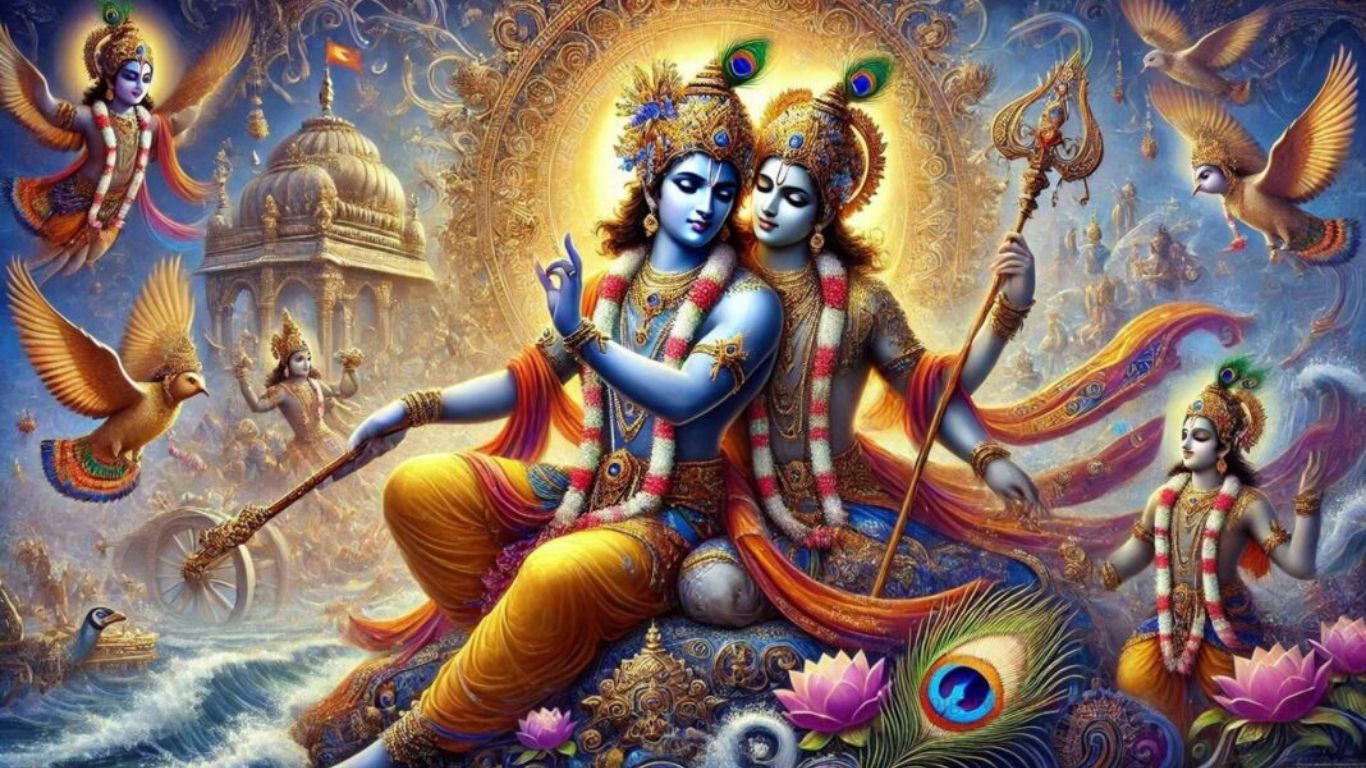
Lord Krishna, one of the most revered deities in Hinduism, is celebrated as a symbol of love, wisdom, and divine guidance. From his playful childhood tales to his profound philosophical teachings in the Bhagavad Gita, Krishna has captured the hearts of millions across the globe. His life story is not only a religious narrative but also a source of moral guidance, spiritual insight, and cultural richness. This article explores the life, teachings, and enduring legacy of Lord Krishna, providing readers with a comprehensive understanding of his significance.
Who is Lord Krishna?
Lord Krishna is the eighth incarnation (avatar) of Lord Vishnu, one of the principal deities in Hinduism responsible for the preservation of the universe. Krishna is often depicted as a young boy playing a flute, a mischievous child with extraordinary powers, or a wise charioteer imparting spiritual wisdom. His life and teachings have been described in sacred texts such as the Bhagavad Gita, Mahabharata, and Bhagavata Purana.
Krishna’s role in Hinduism is multifaceted. He is worshipped as a supreme god, a friend, a lover, and a divine guide. His stories reflect his divine nature, showcasing how he navigated worldly challenges with wisdom, courage, and compassion.
Early Life of Lord Krishna
The early life of Krishna is filled with miraculous events and enchanting tales. Born to Devaki and Vasudeva in Mathura, Krishna’s birth was prophesied to end the tyranny of his uncle, King Kamsa. To protect him, Krishna was secretly transported to Gokul, where he was raised by Yashoda and Nanda.
Krishna’s childhood is celebrated for his playful antics, such as stealing butter, teasing the gopis (milkmaids), and performing extraordinary feats like lifting the Govardhan Hill to protect villagers from torrential rains. These stories, collectively known as Krishna Leela, not only highlight his divine powers but also his playful, loving nature.
Krishna as a Philosopher: The Bhagavad Gita
Lord Krishna is most renowned for his role as the divine charioteer in the Mahabharata, where he imparts spiritual wisdom to Prince Arjuna on the battlefield of Kurukshetra. This discourse, known as the Bhagavad Gita, is considered one of the greatest spiritual texts in the world.
The Bhagavad Gita addresses fundamental questions about life, duty, morality, and the nature of the soul. Krishna teaches Arjuna the principles of dharma (righteousness), karma (action), and bhakti (devotion). His guidance emphasizes the importance of performing one’s duties without attachment to results, a concept known as Nishkama Karma.
Krishna’s Teachings and Philosophy
The teachings of Lord Krishna are timeless and universally applicable. Some key aspects of his philosophy include:
- The Path of Devotion (Bhakti Yoga) – Krishna emphasizes the importance of loving devotion as a means to attain spiritual liberation. True devotion is not just ritualistic but involves surrendering one’s heart to God.
- Detachment and Selflessness – Krishna teaches the value of performing actions selflessly without attachment to the outcomes. This encourages individuals to act with integrity and purpose.
- The Eternal Soul – Krishna explains that the soul is eternal and indestructible, and that physical life is transient. Understanding this truth reduces fear of death and fosters spiritual growth.
- Balance in Life – Krishna encourages balancing material pursuits with spiritual responsibilities, advocating a life of harmony and righteousness.
Krishna in Cultural and Religious Traditions
Lord Krishna’s influence extends beyond religious texts. He has inspired countless art forms, including classical Indian dance, music, paintings, and literature. Festivals such as Janmashtami, which celebrates his birth, are marked by devotion, fasting, singing, and dancing.
Krishna’s stories have been depicted in various regional styles, from Rajasthani and Pahari paintings to Kathakali performances in Kerala. His flute music, known as Murli, is symbolic of divine love and attracts devotees seeking spiritual solace.
Krishna and the Gopis: Symbol of Divine Love
One of the most enchanting aspects of Krishna’s life is his relationship with the gopis of Vrindavan, particularly Radha. Their love is not just romantic; it symbolizes the soul’s longing for union with the divine.
The Rasa Lila dance, performed between Krishna and the gopis, illustrates the idea of divine play and surrender. This symbolism has been interpreted in numerous spiritual texts and devotional practices, representing the eternal bond between God and his devotees.
Modern Relevance of Lord Krishna
Lord Krishna’s teachings continue to resonate in modern times. In an era of stress and uncertainty, his message of selfless action, devotion, and inner balance offers guidance. Leaders, scholars, and spiritual seekers often refer to Krishna’s teachings in the Gita for insight on ethical leadership, personal growth, and moral decision-making.
Krishna’s life stories also provide lessons on resilience, courage, and joy. His ability to overcome challenges with wisdom and love inspires millions to approach life with positivity and faith.
Frequently Asked Questions
Why is Lord Krishna considered the supreme deity in Hinduism?
Krishna is regarded as the supreme deity because he embodies divine love, wisdom, and guidance. As an avatar of Vishnu, he represents the preservation of dharma and the path to spiritual liberation.
What is the significance of Krishna’s flute?
Krishna’s flute symbolizes divine attraction, spiritual bliss, and the call of God to the human soul. It represents the enchanting nature of divine love that draws devotees toward spirituality.
What are the main teachings of the Bhagavad Gita by Krishna?
The Bhagavad Gita teaches the importance of selfless action, devotion to God, the eternal nature of the soul, and adherence to dharma (righteous duty).
How is Krishna’s childhood celebrated?
Krishna’s childhood is celebrated through stories of his mischievous acts and divine feats, particularly during the festival of Janmashtami, where devotees engage in fasting, singing, dancing, and reenactments of his life events.
What is the spiritual significance of Krishna’s relationship with Radha?
Krishna and Radha’s relationship symbolizes the soul’s deep love and devotion toward the divine. It represents selfless love, surrender, and the longing for spiritual union.
Conclusion
Lord Krishna’s life and teachings have left an indelible mark on Hindu philosophy, culture, and spiritual practice. From his playful childhood in Vrindavan to his profound guidance in the Bhagavad Gita, Krishna exemplifies the perfect balance between divine wisdom and human compassion.
His teachings inspire individuals to lead a life of righteousness, devotion, and selflessness. In a rapidly changing world, the timeless lessons of Krishna provide a guiding light, encouraging people to embrace love, courage, and spiritual understanding.