
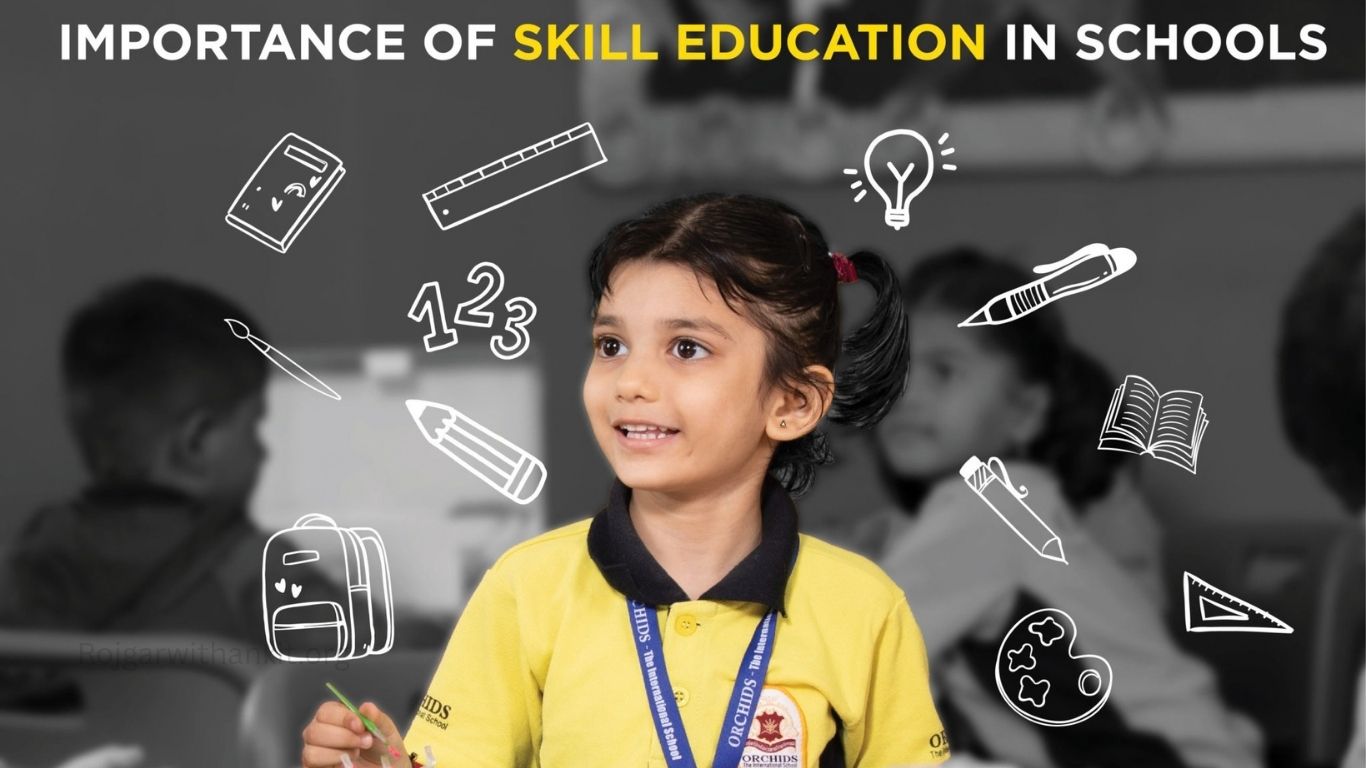
CBSE Skill Education is designed to help students develop practical, vocational and career-oriented skills alongside traditional academic learning. Instead of focusing only on textbook-based knowledge, skill education encourages students to learn through practical activities, projects and real-world applications.
The Central Board of Secondary Education (CBSE) has been expanding skill-based learning in schools in line with the objectives of the National Education Policy (NEP) 2020 and the National Curriculum Framework for School Education. CBSE describes skill education as an important part of preparing students for future opportunities and real-life situations.
For students and parents, understanding CBSE Skill Education courses, subjects, eligibility, assessment and benefits can make it easier to choose suitable learning options.
What Is CBSE Skill Education?
CBSE Skill Education is a school-level learning system that gives students opportunities to develop practical and vocational abilities. The focus is on learning by doing, applying knowledge and developing skills that can be useful in further education, employment and everyday life.
CBSE introduced Skill Modules for students from Classes VI to XII. According to the Board’s 2025 circular, students can choose one or more modules during an academic session, and schools may offer them through regular classes, hobby clubs or online self-learning modes. Assessments for these modules are preferably project-based and school-based.
The purpose is not simply to add another examination subject. Skill education is intended to give students exposure to practical areas and help them understand how classroom knowledge can be connected with real-world situations.
CBSE Skill Education and NEP 2020
Skill education has become an important part of school education reforms following the National Education Policy 2020. The approach encourages students to develop vocational exposure, practical abilities and career awareness at an earlier stage.
CBSE has stated that its skill education initiatives are aligned with NEP 2020 and the National Curriculum Framework for School Education. The Board’s objective is to help students become more well-rounded and future-ready by connecting academic learning with practical skills.
This approach can also help students discover their interests before selecting higher-education or career pathways.
CBSE Skill Education for Classes VI to VIII
Skill-based learning is increasingly being introduced at the middle-school level. CBSE has been implementing Skill Education in Classes VI to VIII using activity-based resources developed by NCERT.
In December 2025, CBSE announced capacity-building programmes for teachers for the mandatory implementation of Skill Education in Classes VI–VIII using the Kaushal Bodh activity books developed by NCERT.
At this level, the emphasis is on exploration, practical activities and developing an understanding of different skills rather than selecting a specialised career pathway immediately.
CBSE Skill Subjects for Classes IX and X
CBSE offers skill subjects at the secondary-school level. According to the Board’s 2025 Skill Education circular, 22 Skill subjects are offered for Classes IX–X. These subjects are connected with specific job roles and National Skills Qualification Framework (NSQF) levels.
The availability of a particular subject can depend on what a school chooses to offer. Therefore, students should check with their school before selecting a skill subject.
Skill subjects can provide students with practical exposure while they continue their regular academic studies.
CBSE Skill Subjects for Classes XI and XII
Skill education also continues at the senior-secondary level. CBSE’s 2025 circular states that 43 Skill subjects are offered for Classes XI–XII. These subjects are mapped to particular job roles and NSQF levels.
For students in Classes XI and XII, skill subjects can become part of a broader academic and career-planning strategy. A student interested in a particular vocational area can use the subject to gain foundational knowledge and practical experience.
However, students should carefully check the subject combination, school availability and applicable CBSE rules before making a selection.
Read More: Education Minister of Bihar 2026
Popular Areas Covered by CBSE Skill Education
CBSE Skill Education covers a wide range of practical and vocational areas. Depending on the class and subjects offered by a school, students may get exposure to areas connected with technology, business, health, media, design, agriculture, tourism, information technology and other sectors.
The objective is to expose students to different kinds of work and encourage the development of practical abilities.
Because the list of subjects can be updated by CBSE, students should refer to the latest official curriculum and subject list instead of relying on old lists published on third-party websites.
Benefits of CBSE Skill Education
One of the major benefits of skill education is that it allows students to connect theoretical knowledge with practical applications. Students can learn through activities, projects and demonstrations rather than depending entirely on traditional classroom teaching.
Skill education can also improve students’ awareness of different career options. A student may discover an interest in technology, business, healthcare, design or another field through practical exposure at school.
Another important benefit is the development of transferable abilities. Communication, teamwork, problem-solving, creativity and practical thinking can be useful across many education and career pathways.
Skill Education and Practical Learning
Practical learning is a central feature of vocational education. Instead of simply memorising information, students are encouraged to understand how knowledge can be applied.
CBSE has described skill-based learning as a process involving learning through doing or practice. The Board’s skill education materials emphasise the importance of applying acquired knowledge to real-life situations.
This approach can make learning more interactive and help students understand the practical value of what they study.
How Are CBSE Skill Subjects Assessed?
Assessment for skill education can include different components depending on the subject and applicable CBSE framework. Practical activities, projects, demonstrations and theoretical understanding can all play a role.
CBSE’s governing body discussions have included proposals for a broader assessment framework involving practical examinations, project-based assessments, theoretical examinations, internships or workplace assessments and certification.
Students should always follow the latest subject-specific curriculum and assessment guidelines issued by CBSE because requirements may vary between courses.
CBSE Skill Education and NSQF
Many CBSE skill subjects are mapped to the National Skills Qualification Framework (NSQF). NSQF provides a structured framework for describing qualifications according to learning outcomes and skill levels.
CBSE’s 2025 circular states that its Skill subjects are mapped to specific NSQF levels, job roles and required study hours.
This connection helps create a more structured relationship between school-level vocational learning and broader skill-development pathways.
Can Students Change a Skill Subject?
Students should be careful when choosing a CBSE Skill subject. The Board has advised that changing a skill subject at Classes X and XII, or selecting a skill subject at these levels without having studied the corresponding subject previously in Classes IX or XI, is generally not advisable because the subjects are mapped to specific levels, job roles and study hours.
For this reason, students should discuss their choice with their school and review the applicable CBSE curriculum before finalising a subject.
Do Schools Need Separate Permission for Skill Education?
CBSE’s 2025 circular states that affiliated schools do not need to seek separate permission from CBSE or pay a separate CBSE fee to introduce Skill Modules or Skill subjects at the relevant levels. Schools are required to provide the relevant information through the applicable administrative process.
The actual availability of a course can still depend on the school’s resources, teachers, infrastructure and implementation arrangements.
CBSE Composite Skill Labs
CBSE has also been moving toward stronger practical infrastructure for skill education. Its 2025 circular referred to an earlier direction requiring affiliated schools to establish a Composite Skill Lab with the necessary equipment within three years of the relevant circular.
Skill labs can provide students with a dedicated environment for practical learning. They can also help schools conduct demonstrations, projects and hands-on activities more effectively.
Role of Teachers in CBSE Skill Education
Teachers play an important role in the successful implementation of skill education. Practical learning requires teachers to guide students through activities, projects and demonstrations while connecting those activities with the relevant learning outcomes.
CBSE has therefore been conducting capacity-building initiatives for teachers. For example, the Board announced programmes for teachers related to the implementation of Skill Education in Classes VI–VIII using NCERT’s Kaushal Bodh activity books.
Teacher training can help schools implement practical education more consistently.
How Students Can Choose a CBSE Skill Subject
Students should begin by identifying their interests and future study plans. Someone interested in technology may prefer a technology-related subject, while another student may be more interested in business, design, healthcare or another practical field.
The next step is to check which subjects are actually available at the student’s school. Not every CBSE school necessarily offers every skill subject.
Students should also review the syllabus, practical requirements, assessment pattern and future relevance before making a final choice. Speaking with teachers, counsellors and parents can also help students understand whether a particular subject matches their interests.
CBSE Skill Education and Career Preparation
Skill education can provide early exposure to career-oriented learning. It does not necessarily mean that a student must immediately enter the workforce after school. Instead, it can help students understand different occupations and develop foundational skills that may support later education or training.
For example, practical exposure during school can help a student better understand whether a particular field is interesting before choosing a related diploma, degree or professional programme.
This makes skill education useful as part of broader career awareness.
Latest Developments in CBSE Skill Education
CBSE continues to expand and refine skill education. The Board’s official website currently maintains dedicated sections for Skill Education, the list of Skill subjects offered, information about individual subjects and related e-resources.
The Board has also continued issuing Skill and Training-related notifications. Its official circular listings include recent programmes concerning the implementation of Skill Education in Classes VI–VIII.
Students and schools should therefore check the latest CBSE notifications and curriculum documents before relying on older information.
Frequently Asked Questions
What is CBSE Skill Education?
CBSE Skill Education is a practical and vocational learning approach that helps students develop skills through activities, projects, practical learning and career-oriented subjects.
Which classes have CBSE Skill Education?
CBSE has Skill Modules for Classes VI–XII. Skill subjects are also offered at the secondary and senior-secondary levels. The Board’s 2025 circular states that 22 Skill subjects are offered for Classes IX–X and 43 for Classes XI–XII.
Is CBSE Skill Education compulsory?
Implementation requirements can differ according to the class, academic session and applicable CBSE directions. CBSE has announced mandatory implementation of Skill Education in Classes VI–VIII through relevant programmes and guidelines. Students and schools should check the latest official CBSE notification for their specific session.
What are the benefits of CBSE Skill Education?
It can help students develop practical knowledge, problem-solving abilities, career awareness and hands-on experience while connecting classroom learning with real-life applications.
Are CBSE Skill subjects linked to NSQF?
Yes. CBSE states that its Skill subjects are mapped to specific NSQF levels, job roles and study hours.
Where can I check the official CBSE Skill Education information?
Students can use the official CBSE website, which provides a dedicated Skill Education section containing skill subjects, information about subjects and e-resources.
Conclusion
CBSE Skill Education is an important part of the Board’s move toward practical, vocational and career-oriented learning. Through Skill Modules and Skill subjects, students can gain exposure to practical activities and develop abilities that complement their academic education.
CBSE has expanded skill-based learning across different school levels and continues to work on teacher training, practical infrastructure, curriculum development and assessment frameworks.